







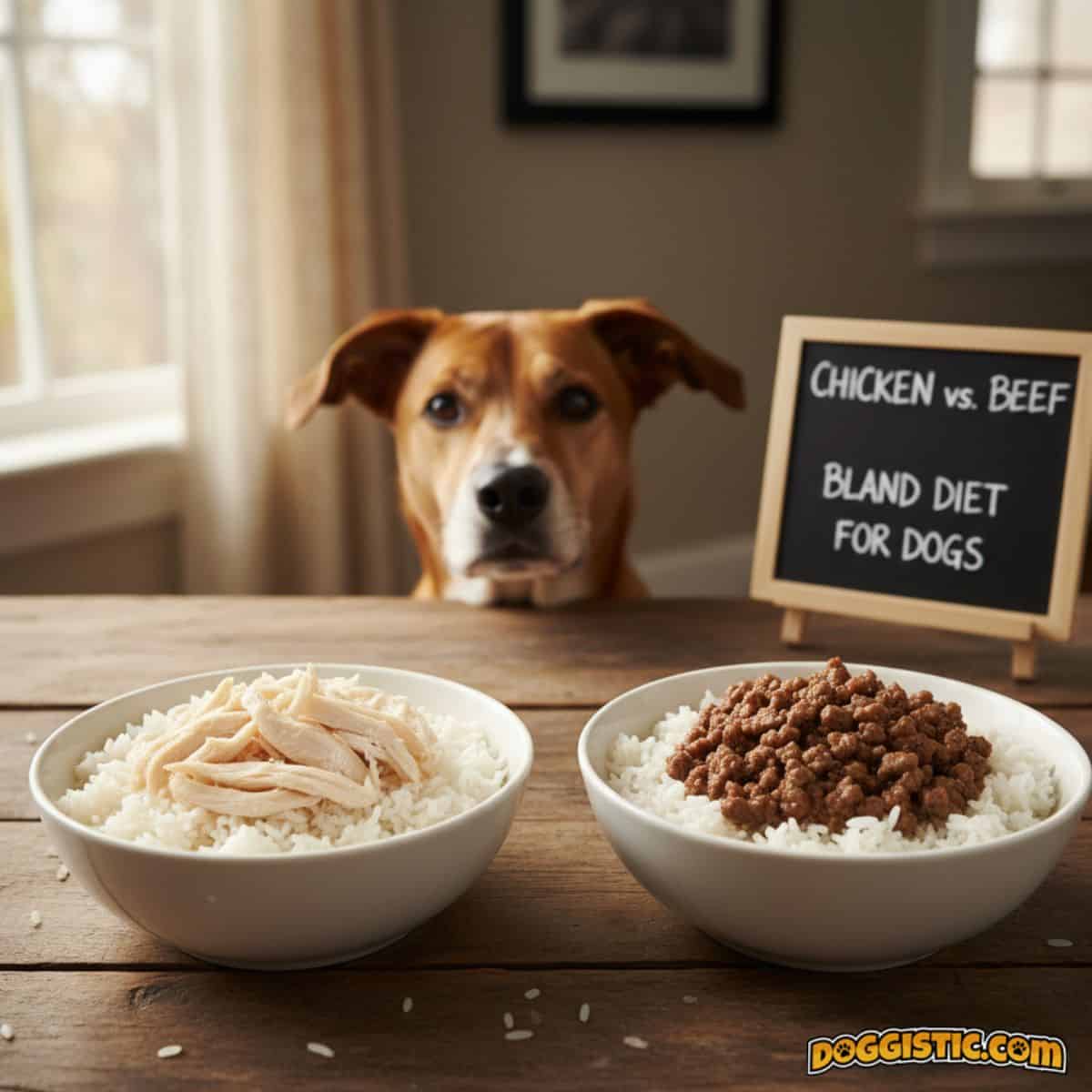
Is a chicken and rice or beef and rice bland diet better for your dog's upset stomach? Learn the pros and cons, how to prepare them, and when to use each for your sick dog.
See my complete post on "what is a bland diet for dogs".
Jump to:
When your dog has an upset stomach, diarrhea, or is vomiting, a veterinarian will often suggest a temporary "bland diet." This simple, easily digestible meal gives their gastrointestinal (GI) tract a chance to rest and recover. The two most popular options are boiled chicken with white rice and boiled lean ground beef with white rice.
But is one a better choice than the other? While both are excellent options, certain situations might make one more suitable for your dog. This article will break down the differences between a beef and rice diet and a chicken and rice diet to help you decide the best way to soothe your furry friend's tummy troubles.
The Case for the Classic: Chicken and Rice
The boiled chicken and white rice diet is the go-to recommendation for many veterinarians for good reason.
- Low in Fat: Skinless chicken breast is naturally very lean. Fat can be difficult for a compromised GI system to digest and can worsen conditions like pancreatitis. The low-fat nature of chicken makes it exceptionally gentle on the stomach.
- Easily Digestible: Chicken is a simple protein that most dogs can break down and absorb easily, providing necessary nutrients without forcing the digestive system to work overtime.
This combination provides energy from the carbohydrates in the rice and muscle-supporting protein from the chicken, all while being mild and soothing.
The Argument for Beef and Rice
While not as traditionally recommended as its poultry counterpart, a lean beef and rice diet is another fantastic choice for a temporary feeding plan.
- Highly Palatable: Many dogs find the rich flavor of beef irresistible. If your sick pup is turning their nose up at food, the enticing aroma of beef might be just what they need to encourage them to eat.
- Nutrient-Dense: Beef is naturally rich in iron, zinc, and vitamin B12, which can help support your dog's energy levels as they recover.
The key to a successful beef-based bland diet is using the right kind of beef and preparing it correctly to remove excess fat.
Head-to-Head Comparison: Chicken vs. Beef
The best choice often comes down to three key factors: your dog's known allergies, the need for a low-fat diet, and your dog's personal preference.
| Feature | Chicken & Rice | Beef & Rice | The Verdict |
| Fat Content | Naturally very low in fat, especially when using skinless breast. | Higher in fat, but can be made lean by using 90-93% lean ground beef and boiling/draining it. | Chicken is the winner for simplicity. It's the safest bet for dogs prone to pancreatitis or those needing a strictly low-fat diet. |
| Allergies | Chicken is a very common food allergen for dogs. | Beef is also one of the more common canine food allergens. | This is a draw. If your dog has a known allergy to one, the choice is simple: use the other. |
| Palatability | Mildly flavored. | Rich, strong flavor that many dogs love. | Beef often wins for picky eaters. If your dog's appetite is poor, beef is more likely to tempt them into eating. |
How to Prepare a Bland Diet (The Right Way)
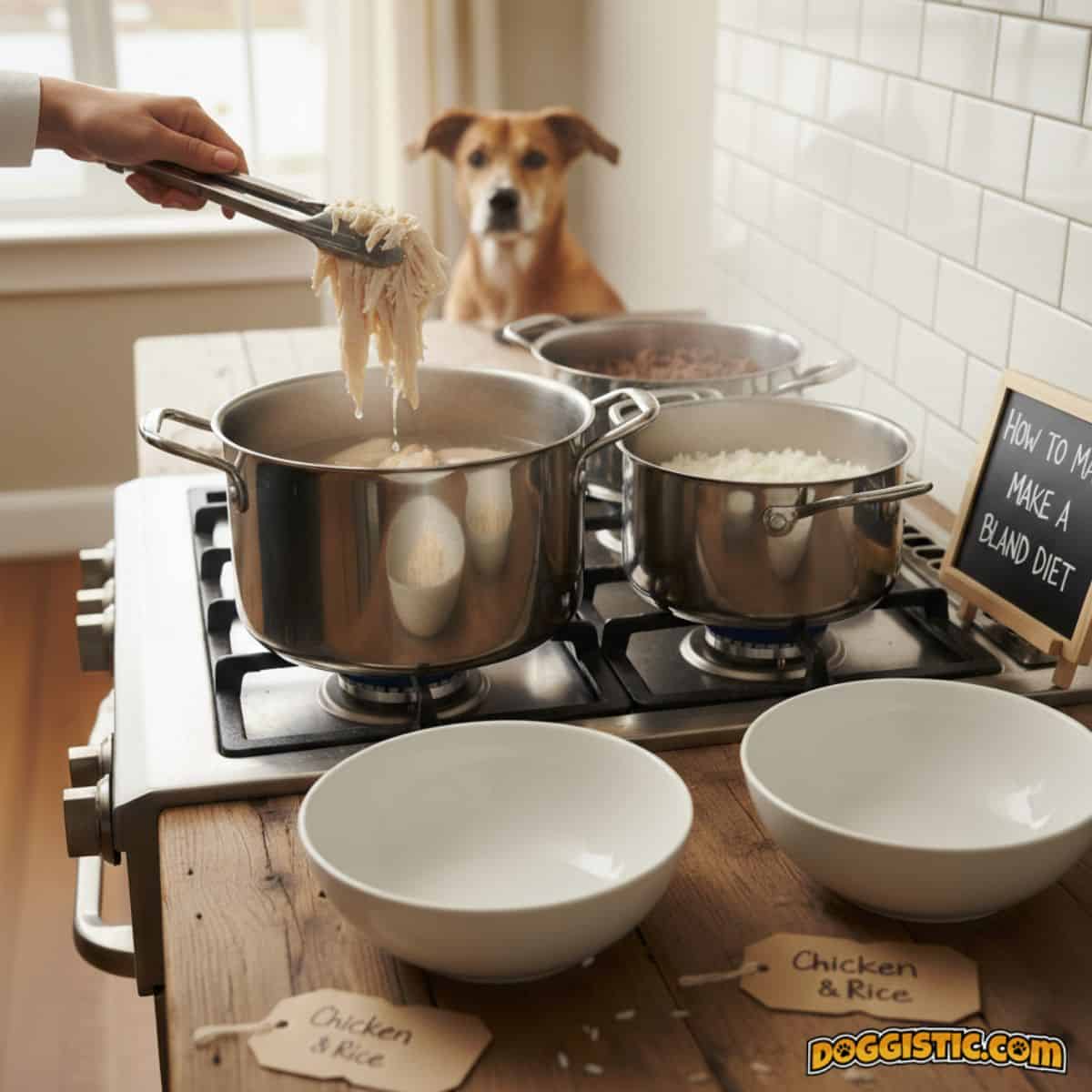
The preparation method is critical for ensuring the diet is as bland and digestible as possible, regardless of which protein you choose.
- Select the Protein: Choose either boneless, skinless chicken breast or lean ground beef (at least 90% lean).
- Boil the Meat: Place the meat in a pot and cover it with water. Boil until it is thoroughly cooked. Do not add any salt, oils, or seasonings.
- Drain Thoroughly: Once cooked, drain the meat and discard the water, which contains the rendered fat. For ground beef, you can rinse the cooked meat with hot water to remove even more fat. Shred the chicken or break up the beef.
- Cook the Rice: Cook plain white rice according to package directions, but do not add salt or butter. Use white rice, not brown rice, as it is lower in fiber and easier to digest.
- Combine and Cool: Mix the cooked meat and rice together. A good starting ratio is 1 part meat to 2 parts rice. Let the mixture cool completely before serving.
Transitioning Back to Normal
A bland diet is a short-term solution, typically used for 2-4 days. Once your dog has had a normal, firm bowel movement for at least 24 hours, you can begin slowly reintroducing their regular food.
- Day 1-2: Serve a mix of 75% bland diet and 25% regular kibble.
- Day 3-4: Move to a 50/50 mix.
- Day 5-6: Serve 25% bland diet and 75% regular kibble.
- Day 7: Return to 100% of their regular food.
When to Call the Veterinarian
A bland diet is perfect for mild digestive upset, but it is not a substitute for professional medical care. You should always consult your vet, especially if you notice the following:
- Vomiting or diarrhea persists for more than 48 hours.
- Your dog is showing signs of serious pain or lethargy.
- There is blood in your dog's stool or vomit.
- Your dog is very young, very old, or has a pre-existing health condition.
Ultimately, both chicken and rice and beef and rice are effective tools in your pet care arsenal. By considering your dog's specific needs and health history, you can choose the option that will get them back on their paws and feeling like their happy, healthy self in no time.

Comments
No Comments